

Introduction
In the vibrant world of marine life, few species capture attention quite like the Blue-and-gold Snapper. Known scientifically as Lutjanus viridis, this striking fish is a true spectacle of color and movement.

Meet the Blue-and-gold Snapper
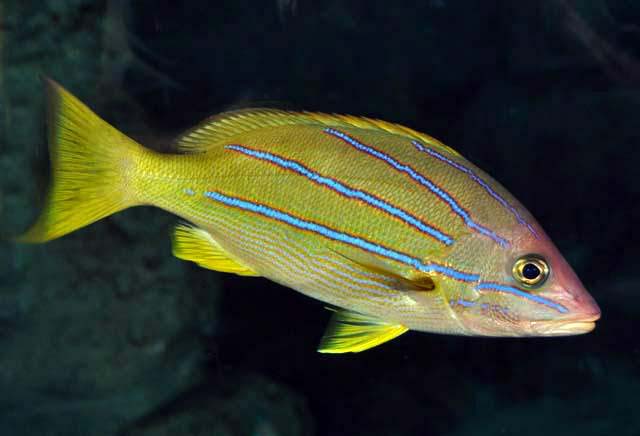
The Blue-and-gold Snapper is a member of the Lutjanidae family, easily recognized by its vibrant blue and gold stripes. These colors not only make it a favorite among aquarium enthusiasts but also help it blend into the colorful coral reefs it calls home.
Habitat & Range
This species is native to the eastern Pacific Ocean, primarily found around coral reefs. It thrives in warm, tropical waters, where it can be seen darting among the coral structures.

Diet & Behavior
The Blue-and-gold Snapper is a carnivorous fish, feeding primarily on smaller fish and invertebrates. Its agile movements and sharp reflexes make it a skilled hunter, often observed in schools, which provide safety in numbers.
Conservation Status
Currently, there is limited data on the conservation status of the Blue-and-gold Snapper. However, like many marine species, it faces threats from habitat destruction and overfishing, which could impact its populations over time.
Why It Matters
The Blue-and-gold Snapper is not only a key species in its ecosystem but also an indicator of coral reef health. Protecting this species helps ensure the biodiversity of coral reefs, which are vital to marine life and human economies.
FAQ
What is the scientific name of the Blue-and-gold Snapper?
The scientific name is Lutjanus viridis.
Where can the Blue-and-gold Snapper be found?
It is found in the eastern Pacific Ocean, predominantly around coral reefs.
What does the Blue-and-gold Snapper eat?
Its diet consists mainly of smaller fish and invertebrates.