

10 Sharp Facts About Prehensile-tailed Porcupines
Wednesday, August 29, 2018 written and photographed by Mika Miller
We recently welcomed two Prehensile-tailed porcupines to our Aquarium family! Here are 10 fun facts about these amazing animals.
1. Porcupines have a very unique and pungent smell! One of the reasons porcupines emit such a powerful odor is to warn predators that they have raised their quills.
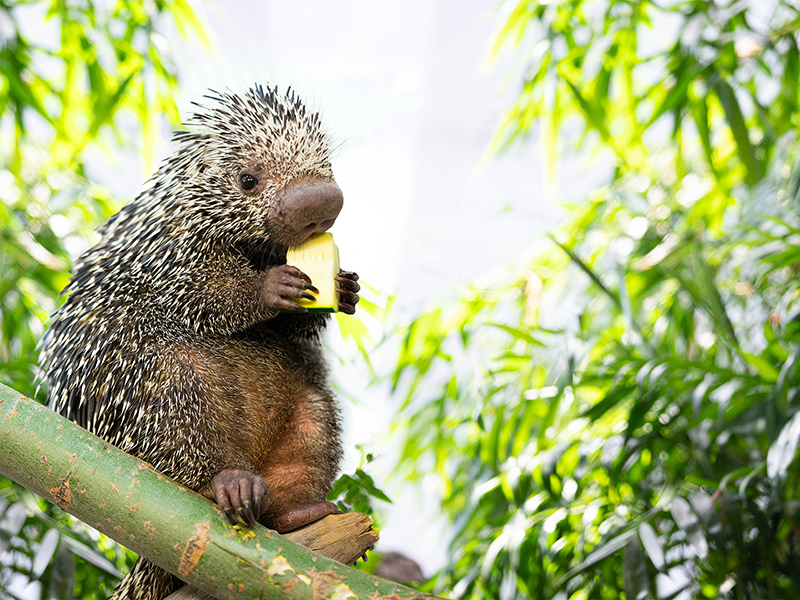
2. Their long-clawed digits on their feet help them climb.

3. Prehensile-tailed porcupines will stamp their hind feet when excited and curl up into a ball when threatened.
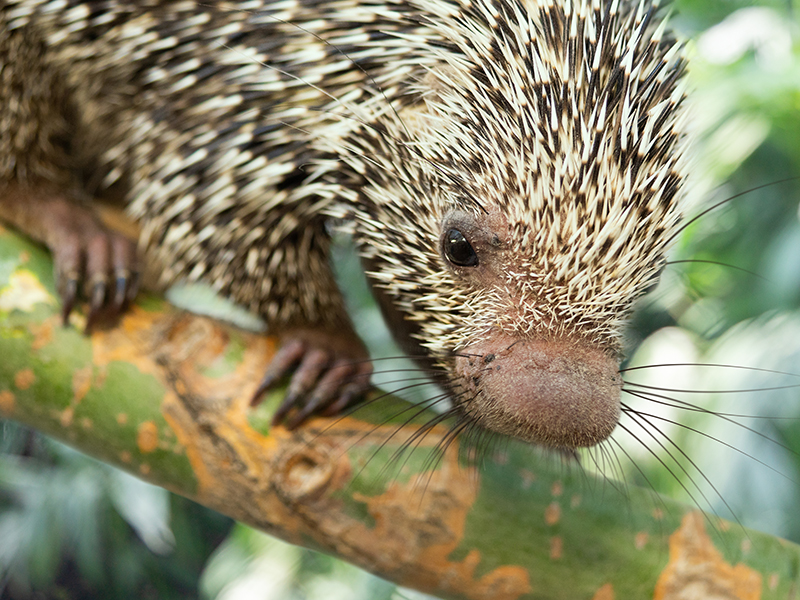
4. They have semi-hollow quills. These quills have tiny barbs on the tips making them hard to remove.
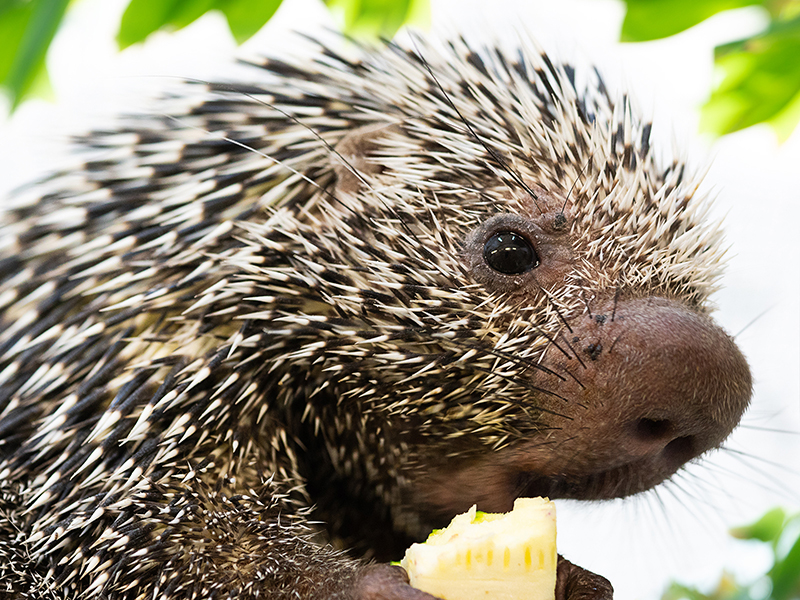
5. Porcupines are rodents! Like all rodents, their front teeth are constantly growing and need to be worn down by gnawing.
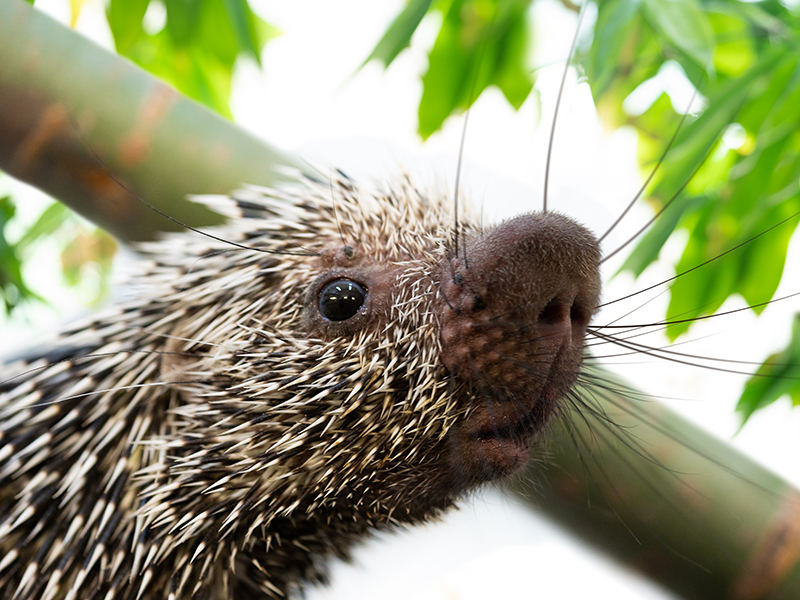
6. Porcupines cannot shoot their quills. However, if a predator makes contact with the quills, they detach easily from the porcupine.

7. Prehensile-tailed porcupines spend most of their time in the treetops of the jungle canopy.

8. Their long, prehensile tails make these porcupines excellent climbers.
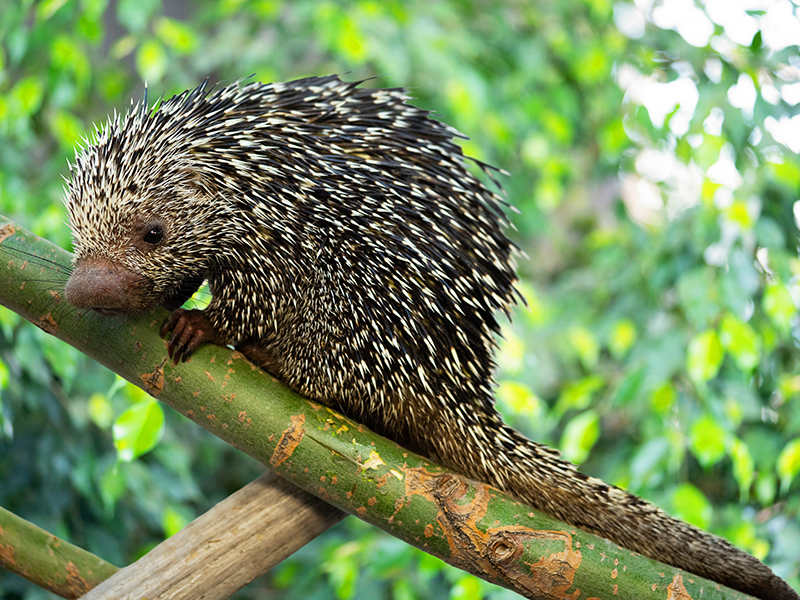
9. They eat leaves, flowers, shoots, roots, and fruits.
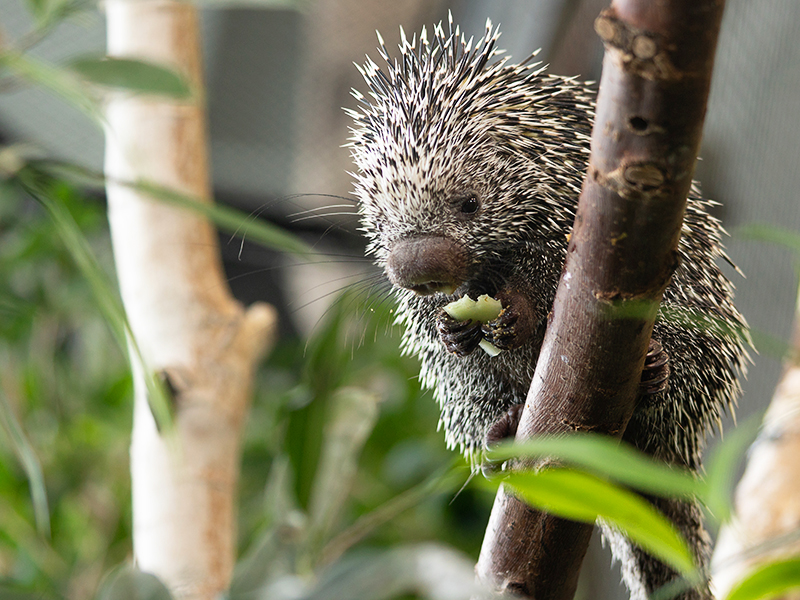
10. Their quills are modified hairs. They are made out of the same protein as human hairs: keratin.

Quill you come and visit these cuties? You can see them in the small aviary in our Journey to South America hall.